
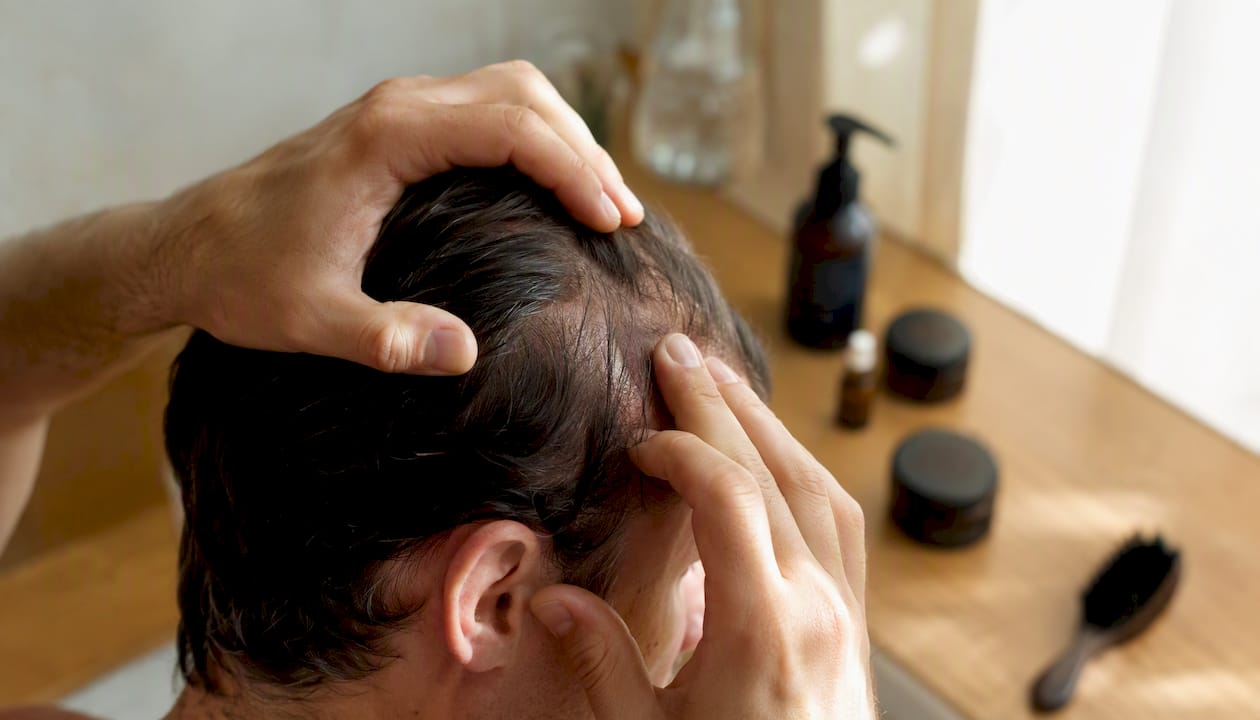
If your hair has started thinning, the single most useful thing you can do today is to build a short daily routine: a lightweight leave-in serum containing biotin, caffeine and pro-vitamin B5, applied to a freshly cleansed scalp, paired with a medical-grade 650 nm LLLT cap used three to five times a week, a regular clarifying wash, and optional daily biotin gummies. That combination is the most evidence-backed, non-invasive way to support follicles in the early stages of thinning, and none of it involves prescriptions or procedures.
Here’s the checklist version, the one worth pinning to your bathroom mirror:
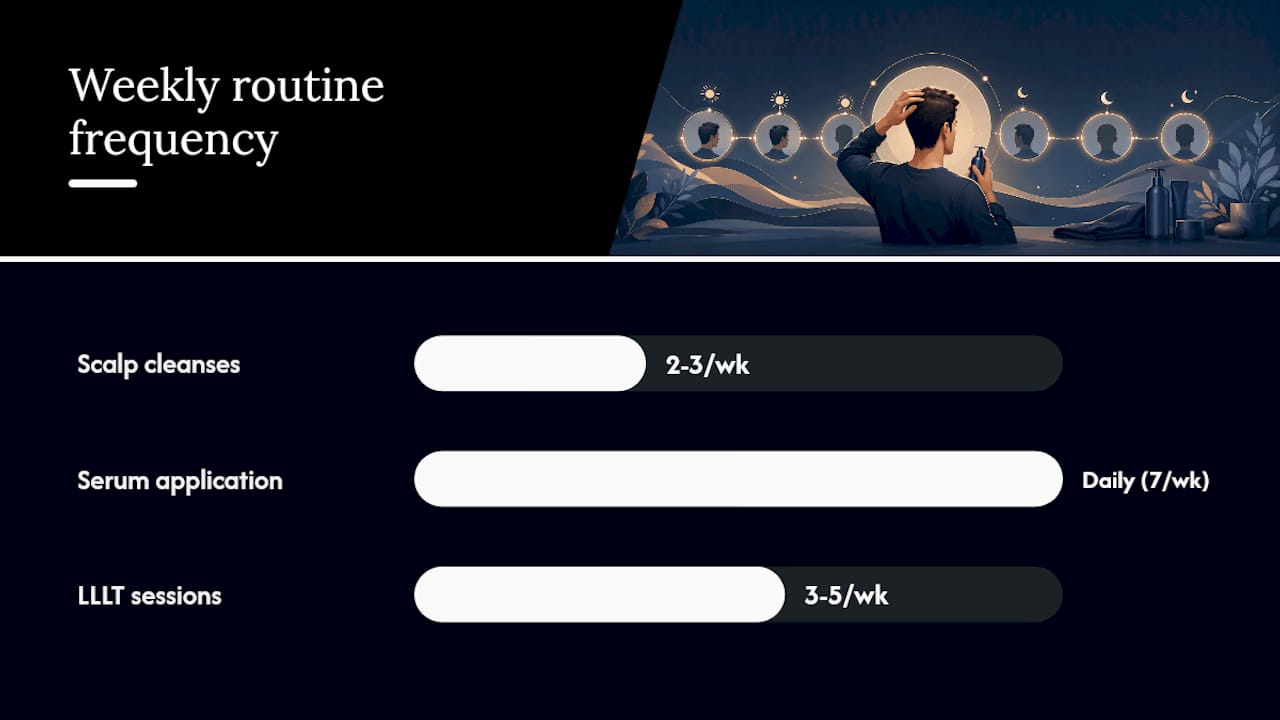
- Apply a biotin and caffeine leave-in serum to a clean scalp every day.
- Run your LLLT cap for the manufacturer’s recommended session length, 3–5 times weekly.
- Wash with a caffeine or rosemary shampoo 2–3 times a week to keep follicles clear.
- Take a daily biotin gummy if your diet is inconsistent or you have a known deficiency.
- Give it 12–26 weeks before judging results.
Consistency, not intensity, is what separates people who see density gains from people who give up at week six. Dermatology-led reviews of hair cycle regulation note that follicles need sustained, repeated signals to shift out of the resting phase and into active growth, which is exactly why sporadic treatment rarely works.
This is general guidance, not a diagnosis. If you notice patchy loss, scalp pain, or sudden shedding, see a dermatologist before starting any routine, since those patterns sometimes point to conditions that need medical treatment rather than daily maintenance.
Key Takeaways
A daily leave-in serum on a clean scalp, combined with 650 nm LLLT three to five times weekly, is the most evidence-backed non-invasive routine for early-stage hair thinning.
| Point | Details |
|---|---|
| Cleanse before applying | Sebum and build-up block follicular entry, so wash 2–3 times weekly before serum use. |
| Run LLLT consistently | Use a 650 nm cap 3–5 times weekly; trials link this to significant density gains. |
| Expect 12–26 weeks | Visible density and thickness changes typically appear in this window, not sooner. |
| Use supplements selectively | Biotin and multi-ingredient formulas are adjuncts, not replacements for topical care. |
| Choose a proven device | Livdor’s 650 nm laser cap and matching biotin, caffeine and serum range cover the full routine with warranty backing. |
What “daily hair moisturizer” actually means for thinning hair
When we talk about a daily hair moisturizer in the context of thinning hair, we don’t mean the creams and butters sold to hydrate curl pattern or tame frizz. We mean daily-use scalp and hair products formulated specifically to support follicle health: leave-in growth serums, caffeine or rosemary shampoos, saw palmetto conditioners, and similar formulations designed to reach the scalp rather than just coat the strand.
This distinction matters because the two categories solve completely different problems. A styling cream smooths the hair shaft. A follicle-targeted serum is designed to penetrate to where growth actually happens. Topical caffeine penetrates hair follicles within minutes and can persist in the follicular reservoir, which is precisely why formulators lean on it for daily leave-ins rather than rinse-out conditioners.
The scope here is drug-free, adjunctive care for early-stage thinning, the kind where you’re noticing more hair in the shower drain or a widening part line, not advanced pattern baldness requiring prescription intervention. Reviews of the hair growth cycle suggest that early thinning often comes from follicles slipping into the resting phase prematurely, and that pairing internal nutrient support with external stimulation is the most consistent way to nudge them back into active growth. Systematic reviews of low-level laser therapy back the external half of that equation with real trial data, which we’ll get into shortly.
A simple daily and weekly routine you can follow
The minimal effective routine looks like this: cleanse your scalp two to three times a week, apply a growth serum daily to clean skin, and run your laser cap three to five times weekly. Everything else, including biotin gummies and scalp massage, is a helpful add-on rather than a core requirement.
Morning or evening, every day:
- Part your hair and apply a few drops of leave-in serum directly to the scalp, not the strands.
- Massage gently for 30 to 60 seconds to help distribution.
- Style as normal once the serum has absorbed.
LLLT sessions, 3–5 times weekly:
- Fit the cap so the diodes sit against the scalp, not hovering over hair.
- Run the full recommended session length without interruption.
- Log the date so you can track adherence over months, not days.
Weekly:
- Wash with a caffeine, rosemary or saw palmetto shampoo to clear product build-up and sebum.
- Follow with a lightweight conditioner if hair feels dry, avoiding heavy silicone-based formulas that can coat the scalp.
One important “don’t”: avoid applying heavy oils or thick styling creams right before an LLLT session. Sebum and product build-up block follicular entry, which reduces how much a serum or laser session can actually reach the follicle. Clean scalp, then serum, then laser, in that order.
Timeline check: most people following this routine report no visible change before week eight. Meta-analyses of LLLT trials show visible density improvements typically appearing between 16 and 26 weeks of consistent use, so patience is part of the protocol, not a failure of it.
Which active ingredients actually work, and why
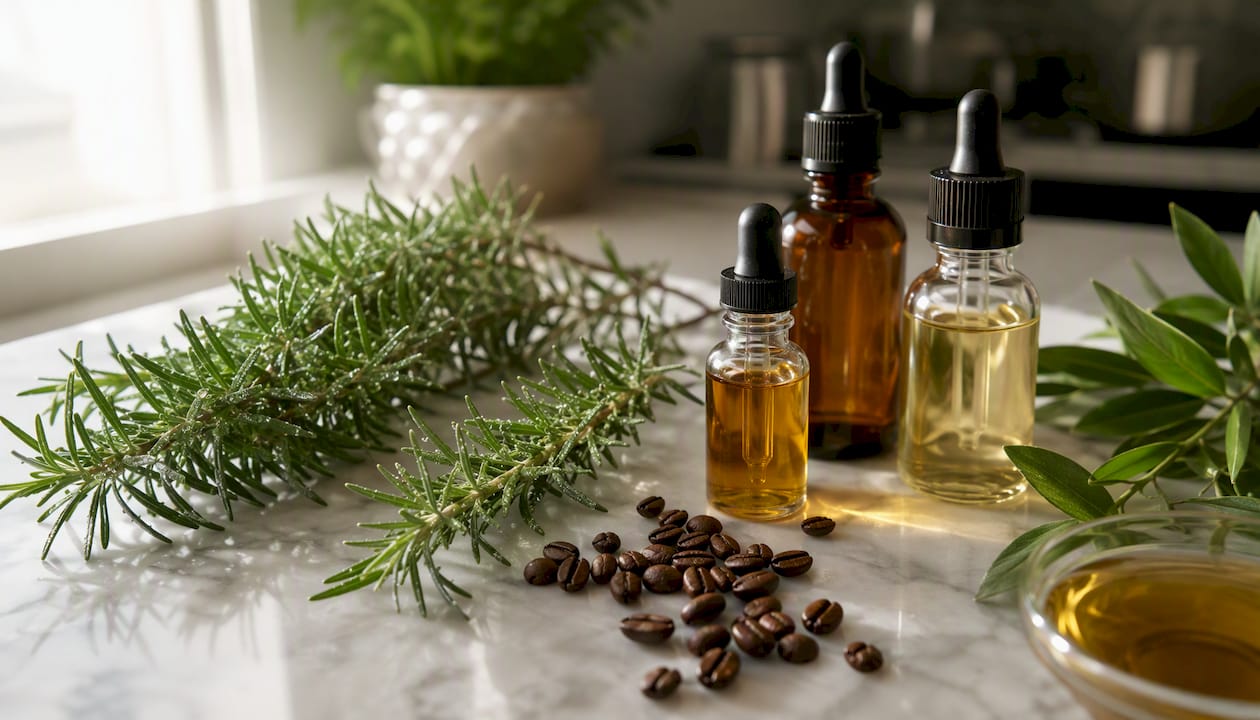
Five ingredients show up again and again in daily formulations aimed at thinning hair, and each earns its place for a different reason. Caffeine acts as a topical stimulant that may support microcirculation around the follicle. Rosemary oil and saw palmetto are used to maintain a scalp environment less hospitable to the processes linked with follicular shrinkage. Biotin and pro-vitamin B5 support the structural building blocks of the hair shaft itself.
| Ingredient | Likely effect | Where you’ll find it |
|---|---|---|
| Caffeine | Topical stimulant, supports scalp microcirculation | Leave-in serums, daily shampoos |
| Rosemary oil | Supports a balanced scalp environment | Conditioners, shampoos |
| Saw palmetto | Traditionally paired with rosemary for scalp support | Conditioners, serums |
| Biotin | Supports hair shaft structure and strength | Serums, gummies, shampoos |
| Pro-vitamin B5 | Supports moisture retention and shaft flexibility | Leave-in serums |
Caffeine and rosemary pair well because one targets stimulation and the other targets the scalp environment, while biotin and pro-vitamin B5 pair well because both support the hair shaft rather than the follicle itself Research into topical actives has even found that combinations including caffeine and biotin can restore expression of genes tied to hair luster and cuticle integrity in model systems, suggesting these actives may improve visible hair quality alongside density over time. Products like the Voraly Bio-Active Veganic Serum build around similar rosemary and saw palmetto actives, which reflects how widely these ingredients are trusted across the natural hair care space.
What the LLLT evidence actually shows
The strongest data point in this entire routine is low-level laser therapy at roughly 650 to 655 nanometres. This isn’t a wellness trend dressed up as science. A randomized, sham-controlled trial of a 655 nm helmet device recorded a 41.90 hairs per square centimetre increase in density and a 7.50 micrometre increase in hair thickness at 16 weeks, with no serious adverse events reported in either group.
| Wavelength | Typical session | Frequency | Reported outcome |
|---|---|---|---|
| 650–655 nm | 30 minutes | 3–5×/week | Density gains over 16 to 26 weeks |
| 655 nm (helmet) | Single session per use | Per protocol | +41.90 hairs/cm² and +7.50 μm thickness at 16 weeks |
Broader systematic reviews and meta-analyses confirm this pattern, reporting density increases and typical visible improvements within about 16 to 26 weeks. A separate meta-analysis of home-use devices found significant density gains versus sham devices across both helmet and comb designs, though it flagged that only a subset of devices on the market carry FDA clearance, which matters when you’re choosing a cap.
Pro Tip: Keep the cap snug enough that diodes touch the scalp through parted hair, and apply your leave-in serum immediately after each session while the scalp is warm and circulation is elevated, this seems to improve absorption based on how caffeine behaves in follicular tissue.
Photosensitivity is rare but possible. If you’re on medication known to increase light sensitivity, check with a clinician before starting LLLT.
Do supplements help, or are they just marketing?
Oral supplements are a genuine adjunct, not a replacement for topical care or LLLT. Used selectively, they add a nutritional layer that daily serums and laser sessions can’t provide on their own.
A recent network meta-analysis spanning 19 randomized controlled trials found positive signals for several supplement types, including standardised plant extract formulas, pumpkin seed oil, and certain multi-ingredient blends, with measurable improvements in hair density or terminal hair density. The same analysis noted these supplements were generally well tolerated, though the evidence base is still described as exploratory rather than definitive.
Practical guidance: choose a biotin gummy or capsule if your diet is inconsistent, you’ve had bloodwork showing a deficiency, or you simply want nutritional insurance alongside your topical routine. Don’t stack multiple biotin-heavy products expecting faster results, since excess biotin doesn’t accelerate growth and can interfere with certain blood test readings. If you’re on other medications or have a thyroid condition, mention any new supplement to your doctor first.
How to choose a serum, shampoo and laser cap without guessing
Prioritise clinical evidence and transparent specifications over marketing claims. That single principle filters out most of the noise in this category.
- Confirm the laser cap wavelength sits at 650 nm, plus or minus 5 nm, matching the range used in published trials.
- Check the number of medical-grade diodes; more coverage generally means more even scalp exposure per session.
- Look for ingredient concentrations listed on topical products, not just a vague “contains caffeine” claim.
- Ask whether the device or brand references peer-reviewed trial data rather than customer testimonials alone.
- Check the warranty length and what support is offered if the device underperforms or malfunctions.
Choosing a reputable supplier matters here more than people expect, particularly for a device you’ll wear on your head three to five times a week for months. A brand like Livdor, which builds its laser hair growth cap around 650 nm medical-grade lasers with documented specifications and warranty backing, removes a lot of the guesswork that comes with unbranded imports lacking any clinical citation at all.
What to realistically expect, and when to see a dermatologist
Visible change on this routine typically shows up between 12 and 26 weeks, in line with the trial data on LLLT and topical actives. Full results, meaning noticeably thicker density across the treated area, often take longer, sometimes six months to a year of consistent use.
Adherence is the real variable in most home-based hair regimens. Dermatology-focused reviews of hair cycle biology consistently point to a minimum three to six month trial as the threshold below which most people can’t fairly judge whether a routine is working.
Mild side effects are uncommon but worth knowing. Scalp irritation can occur with strong actives like undiluted rosemary oil. Photosensitivity is a rare consideration with laser devices. Patch test any new topical product on a small area of skin for 24 to 48 hours before full use, and stop immediately if you notice persistent redness or itching.
Track progress with monthly photographs taken in the same lighting and hair part, since day-to-day changes are invisible but month-to-month shifts often aren’t. If you see no change by month six, or if thinning accelerates rather than stabilises, that’s the point to escalate to a dermatologist and discuss whether prescription options are appropriate for your case.
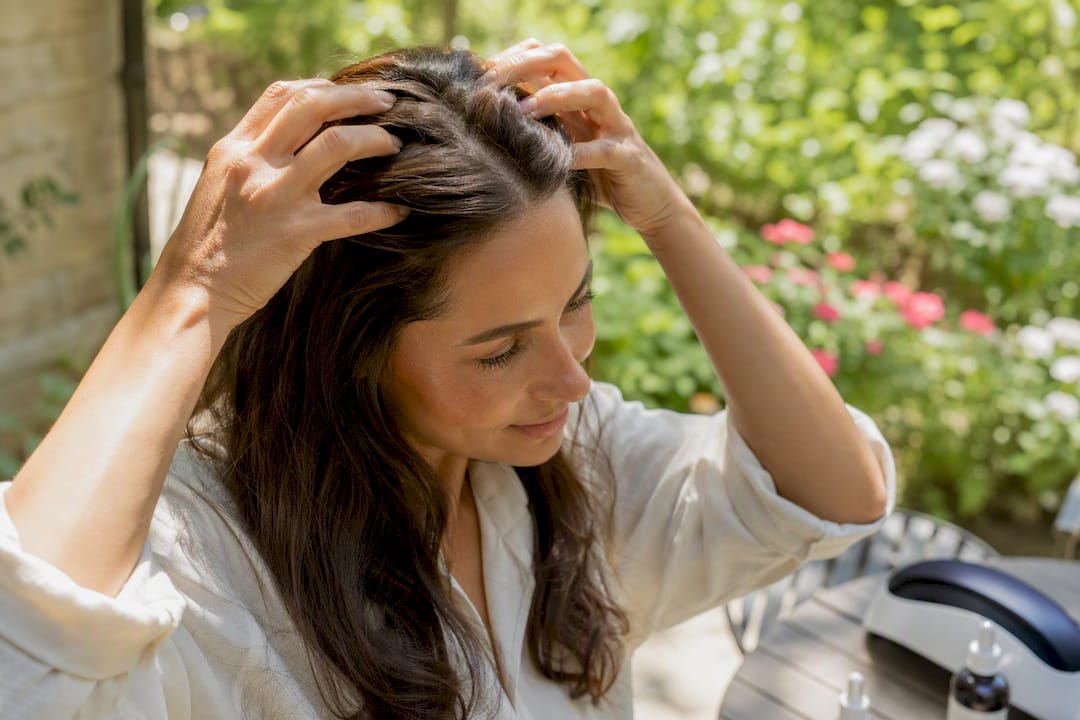
A short daily scalp massage you can do right now
A standardised four-minute daily scalp massage has been shown in a small randomized controlled trial to increase hair thickness alongside measurable changes in gene expression linked to hair growth. It costs nothing and takes less time than brushing your teeth twice.
- Sit comfortably and place both hands on your scalp, fingers spread.
- Apply firm but gentle pressure, moving in small circles across the crown for one minute.
- Move to the sides above the ears and repeat for one minute per side.
- Finish at the hairline and back of the head for the remaining minute, working toward the crown.
- Repeat daily, ideally right after applying your leave-in serum.
Pro Tip: Do the massage immediately after applying your serum rather than before. Massaging the product in, rather than massaging bare skin first, seems to help distribution across the scalp rather than just around your fingertips.
Why a daily, combined approach matters more than any single product
Consistency beats intensity in nearly every study referenced in this piece, and that’s not a throwaway observation, it’s the pattern underlying the entire evidence base for non-drug hair regrowth. A serum used twice this week and forgotten next week won’t outperform a mediocre serum used every single day for six months.
The behavioural piece is often underestimated. People expect a laser cap or a biotin gummy to work like a switch, when the biology involved, shifting follicles out of a resting phase and sustaining that shift, behaves more like a slow-building signal that needs repetition to register. Research into non-invasive therapies suggests LLLT and topical actives work partly through effects on follicle stem cells and their surrounding niche, a process that simply doesn’t respond to occasional use the way a painkiller responds to a single dose.
If you take one thing from this article, let it be this: commit to the routine for a full 12 to 26 weeks before deciding whether it’s working, and take a photo on day one so you have something honest to compare against later.
How Livdor supports this exact daily routine
Livdor builds the two halves of this routine, the device and the topicals, so you’re not piecing together mismatched products from different suppliers. The laser hair growth cap runs at 650 nm across 272 medical-grade lasers, matching the wavelength range used in the clinical trials referenced throughout this article, and it’s backed by a warranty that covers the exact kind of long-term, months-long use this regimen requires.
Alongside the cap, Livdor’s biotin shampoo with caffeine handles the weekly cleansing step, its rosemary and saw palmetto conditioner supports scalp environment between washes, and the hair growth serum with biotin, caffeine and pro-vitamin B5 is formulated as the daily leave-in this article recommends applying straight after cleansing. For anyone who’d rather not want to fill their diet gaps with food alone, biotin gummies round out the internal side of the routine.
If you want the whole regimen sorted in one order rather than four separate decisions, the hair growth starter kit bundles the cap and core topicals together, with the same warranty and support backing every individual product. Start with the kit, follow the 12 to 26 week timeline outlined above, and photograph your progress from day one.
Selected clinical trials and reviews to read next
- Low-level laser therapy for hair loss: a review and meta-analysis
- Clinical trial of helmet-type LLLT for androgenetic alopecia
- Systematic review and meta-analysis on LLLT for pattern hair loss
- Caffeine as an active molecule in cosmetic products for hair loss
- Effects of dietary supplements on androgenetic alopecia: network meta-analysis
- Stem cell and niche regulation in hair growth and therapies
- Dermatology review on hair cycle regulation
- Scalp massage and mechanobiology study
This article is general information, not a substitute for advice from a qualified doctor. Consult a qualified healthcare professional about your own circumstances before acting on anything here.
Sources
- Low‑level laser therapy for hair loss: a review and meta‑analysis (PMC7548873)
- Clinical trial of helmet‑type LLLT for androgenetic alopecia (PMC7373546)
- Caffeine as an active molecule in cosmetic products for hair loss (MDPI Molecules)
- Effects of dietary supplements on androgenetic alopecia: network meta‑analysis (Frontiers, 2026)
- Stem cell and niche regulation in hair growth and therapies (PMC10834421)
FAQ
How Often Should I Use a Daily Hair Moisturizer for Thinning Hair?
Apply a leave-in growth serum daily to a clean scalp, and use a follicle-targeted shampoo two to three times a week to prevent build-up that blocks absorption.
Can I Use LLLT and a Growth Serum on the Same Day?
Yes. Applying serum immediately after an LLLT session is common practice, since scalp circulation is elevated post-session, which may support absorption.
How Long Before I See Results From a Daily Hair Regimen?
Most clinical trials show visible density and thickness improvements between 16 and 26 weeks of consistent use, though some people notice early changes around week 12.
Is a 650 nm Laser Cap Safe to Use Every Day?
Most protocols call for 3 to 5 sessions weekly rather than daily use; Livdor’s laser hair growth cap follows this trial-based frequency with a manufacturer warranty for peace of mind.
Do I Still Need Biotin Gummies if I Use a Topical Serum?
Not necessarily. Gummies are a useful adjunct if your diet is inconsistent or you have a confirmed deficiency, but they don’t replace daily topical care or LLLT.
When Should I See a Dermatologist Instead of Self-Treating?
See a dermatologist if you notice patchy or sudden shedding, scalp pain, or no improvement at all after six months of consistent daily and weekly care.

Leave a comment
This site is protected by hCaptcha and the hCaptcha Privacy Policy and Terms of Service apply.