

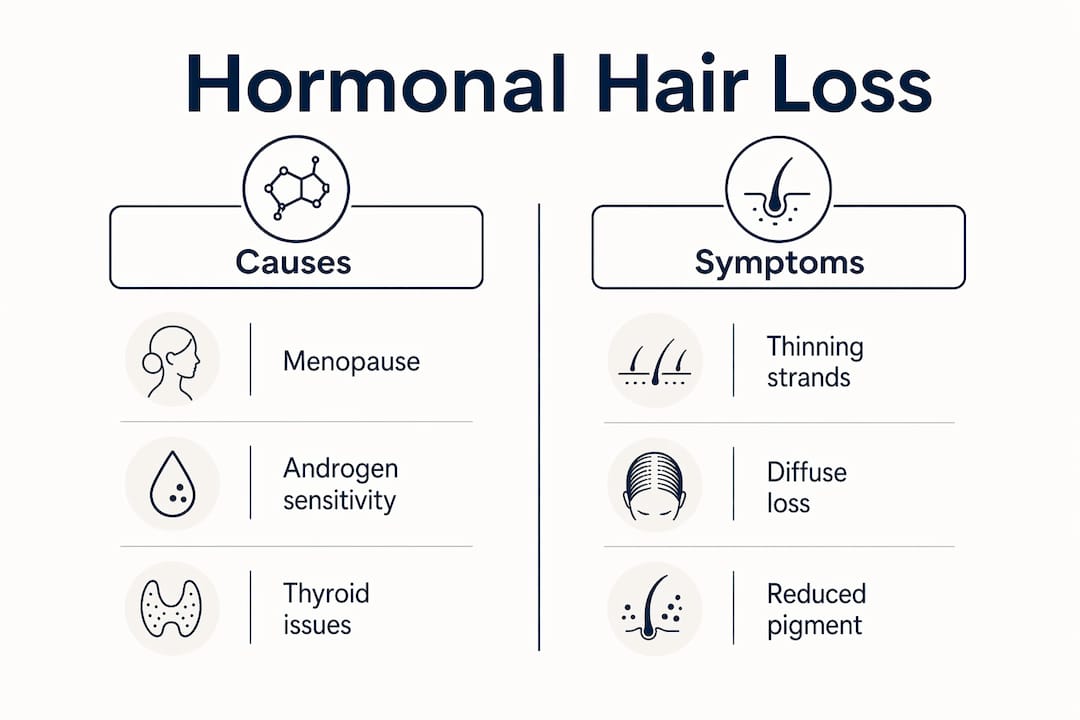
Hormonal hair loss in women is one of the most common yet least discussed consequences of menopause. Androgenetic alopecia affects about 50% of women over their lifetime, with nearly 40% showing clinical hair thinning by age 50. The condition is driven primarily by declining oestrogen and progesterone, which allows androgens to exert a stronger influence on hair follicles, triggering miniaturisation and progressively finer, shorter strands. Crucially, this does not require abnormally high androgen levels. Many women with significant thinning have entirely normal hormone blood results, because it is follicle sensitivity, not circulating hormone levels, that drives the process.
Common signs to watch for include:
- Diffuse thinning across the crown and top of the scalp
- A widening parting line
- Increased shedding, particularly on the pillow or in the shower
- Hair that grows back finer and shorter than before
- Reduced overall volume without a receding hairline
What causes hormonal hair loss in women, and how does it present?
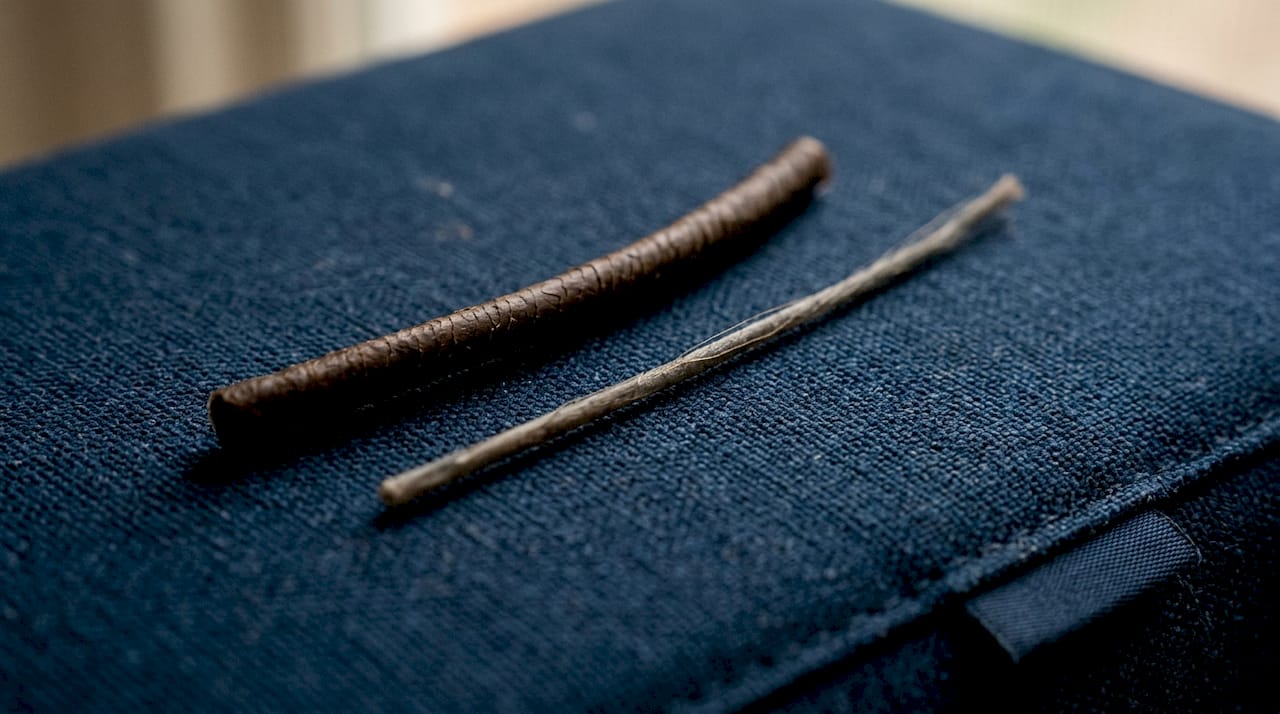
The menopausal transition can begin up to 10 years before periods stop, meaning hair changes can start in a woman’s late thirties or early forties. During this perimenopause window, fluctuating oestrogen and progesterone shorten the anagen (active growth) phase of the hair cycle and extend the telogen (resting) phase. The result is that long, pigmented terminal hairs are gradually replaced by short, fine vellus hairs.
Two distinct patterns are worth distinguishing. Female pattern hair loss (androgenetic alopecia) produces slow, diffuse thinning concentrated at the crown, with the frontal hairline usually preserved. Telogen effluvium, by contrast, causes sudden, widespread shedding triggered by a specific stressor such as surgery, rapid weight loss, or a hormonal shift at menopause. Both can occur simultaneously, which is why diagnosis matters.

| Feature | Normal hair | Hormonal hair loss |
|---|---|---|
| Strand thickness | Consistent, pigmented | Progressively finer, lighter |
| Shedding volume | 50–100 strands daily | Noticeably increased |
| Growth phase length | 2–6 years | Shortened |
| Scalp visibility | Not visible | Crown and parting more visible |
| Hairline | Stable | Maintained but volume reduced |
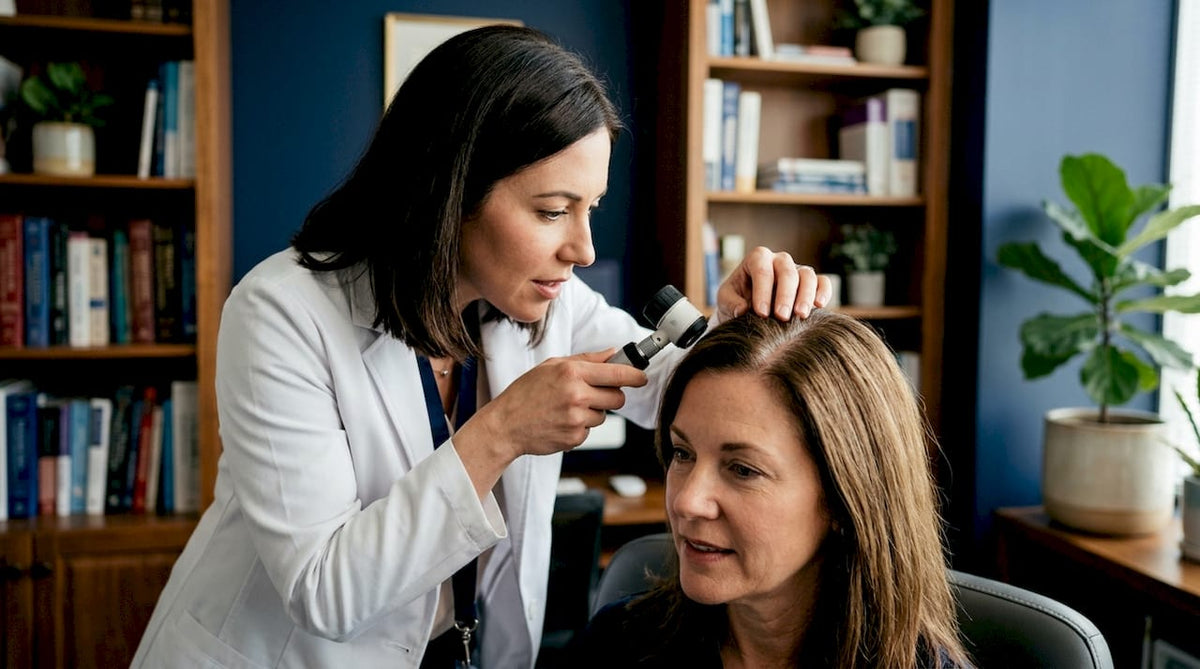
A GP or dermatologist will typically request blood tests covering thyroid function (TSH, T3, T4), serum ferritin, and sex hormone levels. Thyroid disorders and hair loss in women are closely linked; both hypothyroidism and hyperthyroidism can accelerate shedding and are worth ruling out early. A trichoscopy or scalp biopsy may follow if the diagnosis remains unclear.
Medical treatment options for hormonal hair thinning in women
Topical minoxidil is the only treatment currently approved by the MHRA for female pattern hair loss in the UK. Applied directly to the scalp once or twice daily, it prolongs the anagen phase and widens blood vessels around follicles. Clinical evaluation requires at least 6 months before efficacy can be properly assessed, and stopping treatment causes any regained hair to shed within months. Think of it as ongoing maintenance rather than a cure.
For women who do not respond adequately to minoxidil alone, dermatologists often add anti-androgen therapy:
- Spironolactone (100–200 mg daily): blocks androgen receptors at the follicle level; nearly 75% of women in one retrospective study reported stabilisation or improvement
- Finasteride (off-label, 2.5–5 mg daily): a 5-alpha-reductase inhibitor that reduces DHT production; classified as pregnancy category X and not suitable for women who may conceive
- Dutasteride (0.5 mg daily, off-label): inhibits both type I and type II 5-alpha-reductase enzymes, making it more potent than finasteride; also pregnancy category X
- Low-level laser therapy (LLLT): 650nm devices stimulate follicle mitochondrial activity and are used as an adjunct to topical and oral treatments
Because follicle sensitivity rather than androgen excess is the underlying mechanism for most women, localised treatments that act directly at the scalp tend to produce the best outcomes with the fewest systemic side effects.
Key point: Combination therapy targeting the follicle through multiple pathways simultaneously produces better outcomes than any single treatment used alone.
Lifestyle adjustments and coping strategies for hair loss
The psychosocial impact of hair loss in women is frequently underestimated by clinicians. Anxiety, reduced self-esteem, and social withdrawal are common, and addressing these alongside the physical condition is part of effective care.
Practical lifestyle changes that support hair health:
- Reduce chronic stress through regular exercise, mindfulness, or yoga, as cortisol disrupts the hair growth cycle
- Eat a diet rich in iron, zinc, and protein to support follicle function
- Avoid tight hairstyles (ponytails, braids) that create traction on already fragile strands
- Use gentle, sulphate-free shampoos formulated for thinning hair
- Consult a trichologist or dermatologist promptly if shedding accelerates suddenly
Premium topical products can make a real difference to scalp environment and strand quality. A biotin shampoo with caffeine stimulates the scalp and strengthens the hair shaft from the root. Livdor’s Saw Palmetto and Rosemary Shampoo combines two botanicals with well-documented anti-androgenic and circulation-boosting properties. Pairing these with a Biotin Conditioner or Rosemary Conditioner with Saw Palmetto helps maintain moisture and reduce breakage between washes.
Pro Tip: Apply your hair growth serum to a clean, slightly damp scalp before LLLT sessions. The serum’s active ingredients, including biotin and Pro-Vitamin B5, penetrate more effectively when the scalp is prepared, and the laser session that follows enhances absorption further.
Science-backed at-home solutions: LLLT and targeted supplements
Low-level laser therapy at 650nm wavelength works by energising the mitochondria within hair follicle cells, increasing ATP production and extending the anagen phase. This is not a cosmetic trick. Combining 650nm laser caps with topical serums and targeted nutritional supplements is recognised as a gold-standard approach for female pattern hair loss, targeting the follicle through multiple mechanisms simultaneously.
Livdor’s Laser Hair Growth Cap uses 272 medical-grade 650nm lasers to deliver consistent, hands-free treatment across the entire scalp. It is designed for home use, requires no prescription, and carries clinical backing. Used consistently three to four times per week, most women notice reduced shedding within 8–12 weeks and visible density improvements by the three to six month mark.
The results improve further when LLLT is combined with:
- Hair Growth Serum containing biotin, caffeine, and Pro-Vitamin B5: caffeine blocks DHT at the follicle, biotin supports keratin production, and panthenol (Pro-Vitamin B5) strengthens the hair shaft
- Biotin Gummies or hair growth vitamins: provide the internal nutritional foundation that topical products cannot fully replace
- Saw Palmetto and Rosemary Shampoo: natural anti-androgen and scalp-circulation support at every wash
Applying a nutrient-rich serum before each LLLT session enhances follicle stimulation by priming the scalp for deeper laser penetration. Consistency is everything. Stopping treatment causes hair to revert to its pre-treatment state within months, so building these steps into a daily or weekly routine is the most reliable path to lasting results.
How diet and nutrition affect hormonal hair loss
Hair follicles are among the most metabolically active structures in the body, which makes them acutely sensitive to nutritional shortfalls. Iron deficiency is particularly common in perimenopausal women due to heavier periods in the years before menopause, and low ferritin is a well-established driver of telogen effluvium. Zinc, selenium, and vitamin D each play roles in the hair cycle, and deficiencies in any of them can accelerate shedding even when hormones are otherwise stable.
Protein intake matters too. Hair is almost entirely composed of keratin, a protein, so inadequate dietary protein directly limits the raw material available for new strand production. Aim for a varied diet that includes lean meat, fish, eggs, legumes, and leafy greens. For women who struggle to meet requirements through food alone, nutritional supplements for hair support such as biotin gummies and comprehensive hair growth vitamins provide a reliable top-up. Biotin specifically supports keratin infrastructure, and the evidence for its role in hair health is strongest in women with a confirmed deficiency. You can also explore natural complementary options such as the Voraly Bio-Active Veganic Serum, a plant-based oil formulated to support scalp health and strand strength.
How is hormonal hair loss different from other types of hair loss?
Not all hair loss in women has a hormonal root. Understanding the differences helps you seek the right treatment rather than spending months on the wrong one.
Female pattern hair loss (androgenetic alopecia) is gradual, symmetrical, and concentrated at the crown. It does not cause scarring and the follicles remain viable, which is why early treatment produces the best outcomes. Telogen effluvium is diffuse and sudden, usually triggered by a specific event, and often self-resolves once the trigger is removed. Alopecia areata is autoimmune, producing patchy, well-defined bald spots rather than generalised thinning. Traction alopecia results from physical tension on the hair shaft and typically affects the hairline. Scarring alopecias, such as frontal fibrosing alopecia, destroy follicles permanently and require specialist intervention urgently.
Thyroid disorders and hair loss in women deserve particular mention because hypothyroidism can closely mimic female pattern hair loss, with diffuse thinning across the scalp. A simple blood test distinguishes the two. If thyroid function is the cause, treating the underlying condition often resolves the shedding without any additional hair-specific therapy.
Livdor’s science-backed approach to hair regrowth
If you are looking for a drug-free, non-invasive route to managing hormonal hair thinning, Livdor offers a complete at-home system built around clinically supported technology. The difference from simply buying a shampoo or a supplement is the combination: medical-grade LLLT working alongside targeted topicals and nutritional support to address the follicle from every angle.
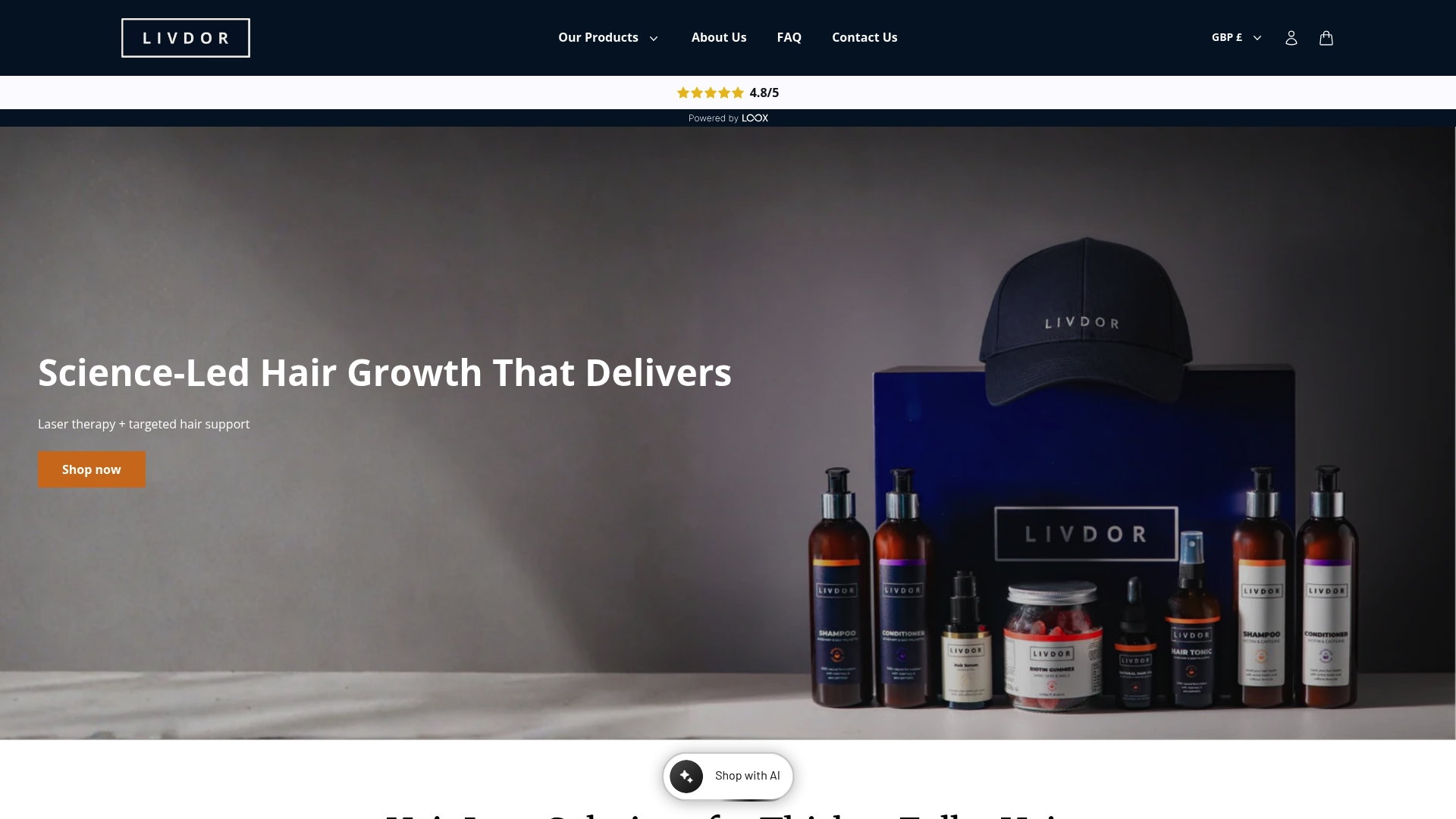
The Livdor Laser Hair Growth Cap sits at the centre of the system, delivering 272 medical-grade 650nm lasers across the full scalp in hands-free sessions. Pair it with the Hair Growth Serum, a biotin or caffeine shampoo, Biotin Gummies, and hair growth vitamins for a protocol that addresses hormonal thinning at the follicle, the scalp surface, and from within. Every product is formulated without harsh chemicals, made to be gentle enough for daily use, and backed by a comprehensive warranty. Visit livdor.com to explore the full range and find the combination that fits your routine.
Key takeaways
Hormonal hair loss in women is driven by follicle sensitivity to androgens during menopause, and the most effective approach combines LLLT, targeted topicals, and nutritional support used consistently over months.
| Point | Details |
|---|---|
| Prevalence | Around 50% of women experience androgenetic alopecia over their lifetime; nearly 40% show clinical hair thinning by age 50. |
| Root cause | Declining oestrogen allows androgens to miniaturise follicles, even when blood androgen levels are normal. |
| Treatment timeline | Clinical evaluation of any treatment, including minoxidil and LLLT, requires at least 6 months to assess results. |
| Consistency is critical | Stopping treatment causes regained hair to shed within months; ongoing use is required to maintain benefits. |
| Livdor’s approach | Livdor combines a 272-laser 650nm cap with serums, biotin gummies, and vitamins for a complete drug-free protocol. |
FAQ
Can hormonal hair loss in women be reversed?
Partial reversal is possible, particularly when treatment begins early before follicles miniaturise fully. Minoxidil, LLLT, and anti-androgen therapies can stimulate regrowth, though maintaining the result requires ongoing treatment.
How do you fix hormonal hair loss?
The most effective approach combines topical minoxidil, a 650nm LLLT device, and targeted nutritional support such as biotin and hair growth vitamins, used consistently for at least 6 months before assessing results.
Can hair grow back after hormonal hair loss?
Yes, provided the follicles are still active. Early intervention gives the best chance of regrowth; once follicles are permanently miniaturised, regrowth becomes much harder to achieve.
How do I stop hair falling out during menopause?
Address the hormonal environment with your GP (spironolactone or topical minoxidil may be appropriate), support scalp health with a caffeine or biotin shampoo, and use a 650nm laser cap consistently to stimulate follicle activity.
When should I see a specialist about hair loss?
See a GP or dermatologist if shedding is sudden and severe, if you notice patchy bald spots, or if hair loss is accompanied by other symptoms such as fatigue, irregular periods, or acne, as these may indicate a thyroid disorder or another underlying condition.

Leave a comment
This site is protected by hCaptcha and the hCaptcha Privacy Policy and Terms of Service apply.